The Cost of This Job
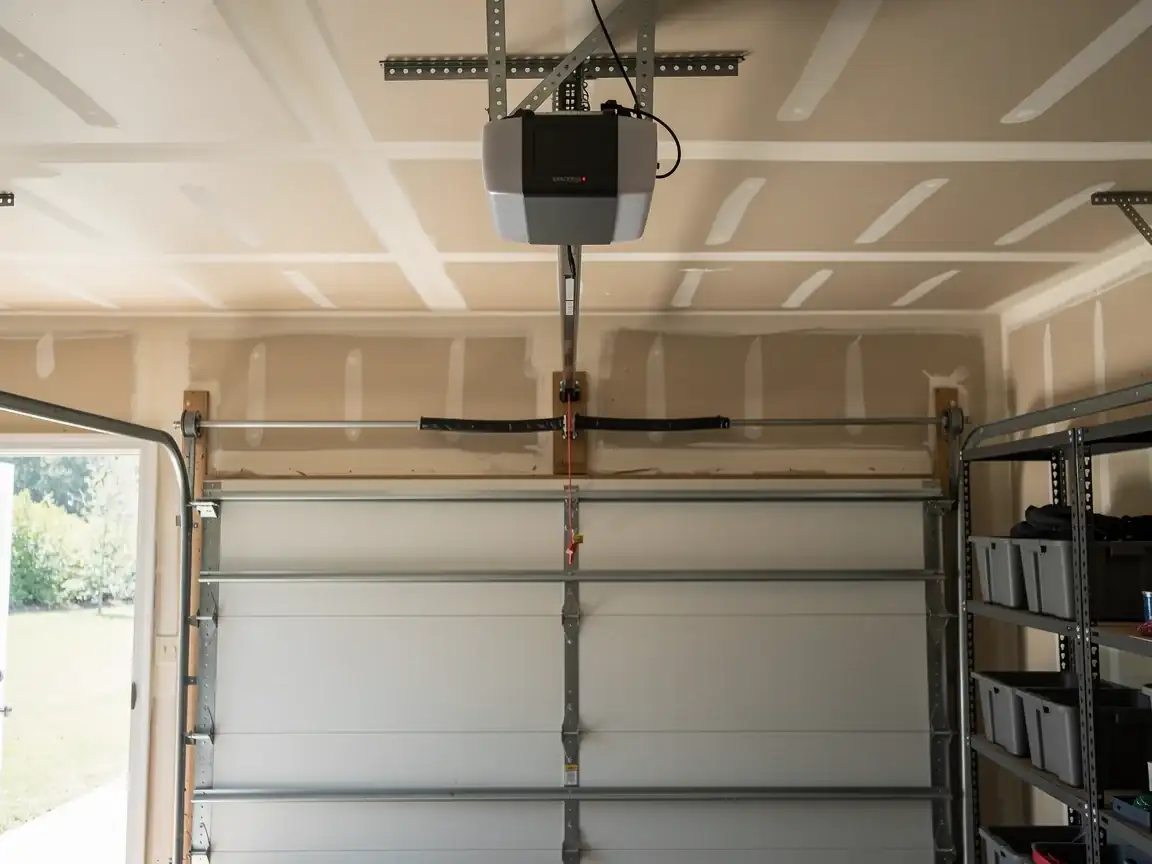
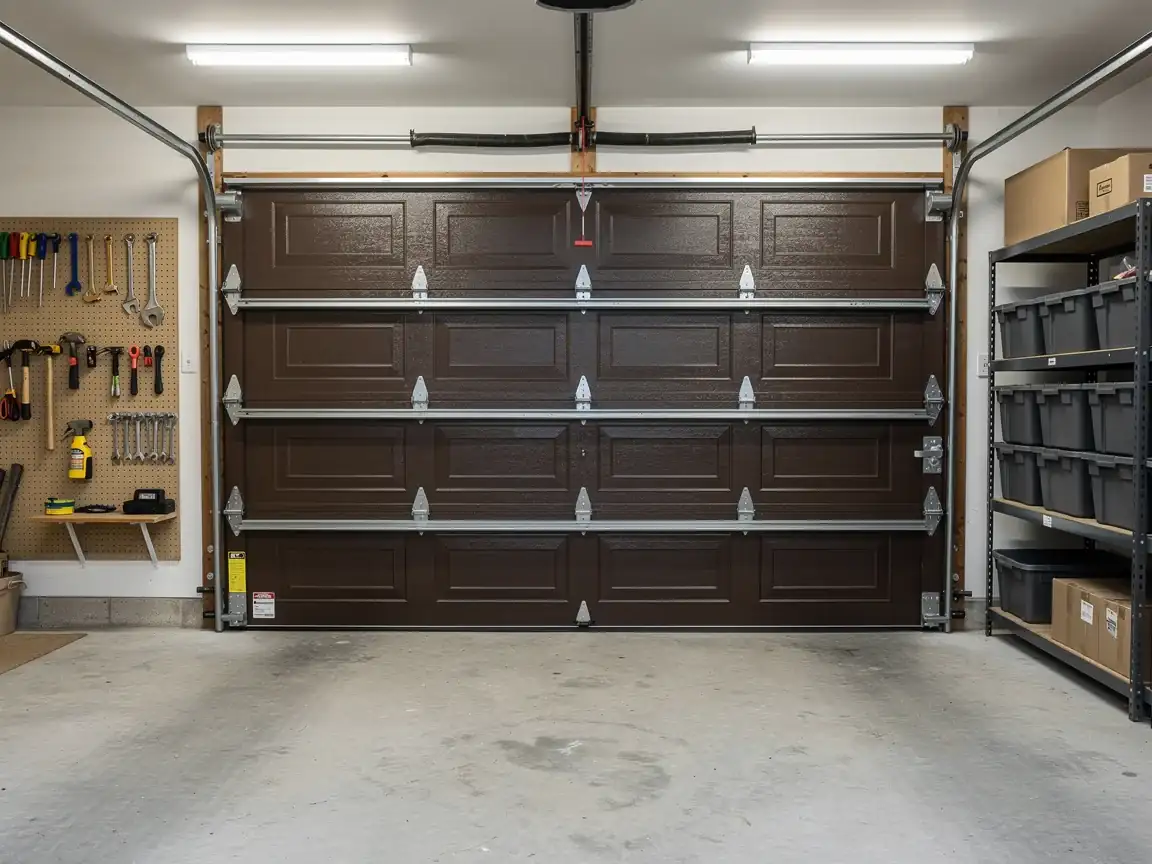
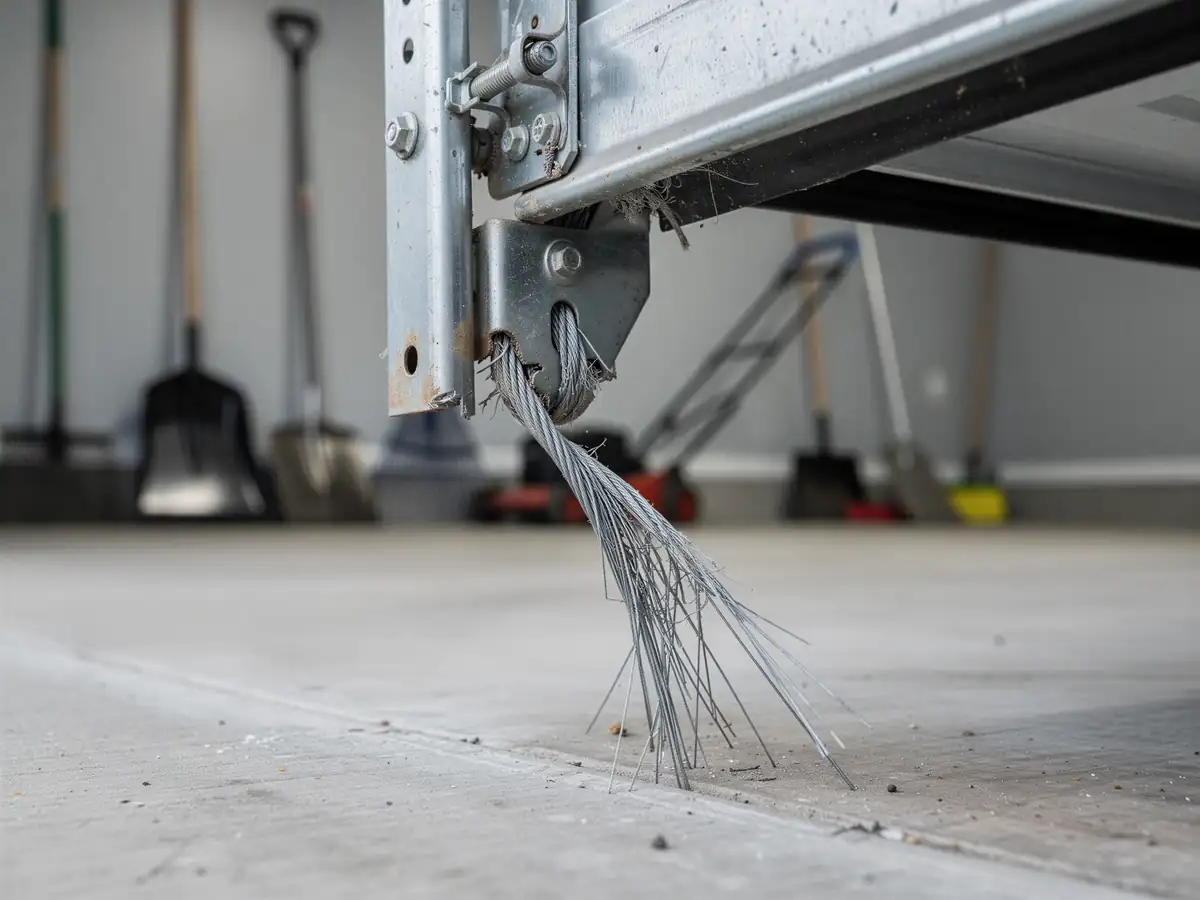
Most garage doors in Brier went up around 1986, which puts them squarely in the run of steel sectional doors with galvanized lift cables on standard torsion springs - the kind builders used across this corner of the county from the early 70s into the 2000s. These are double-car doors on two-car garages more often than not, heavy enough that a snapped cable doesn't just stick the door, it can drop one corner hard onto the track.
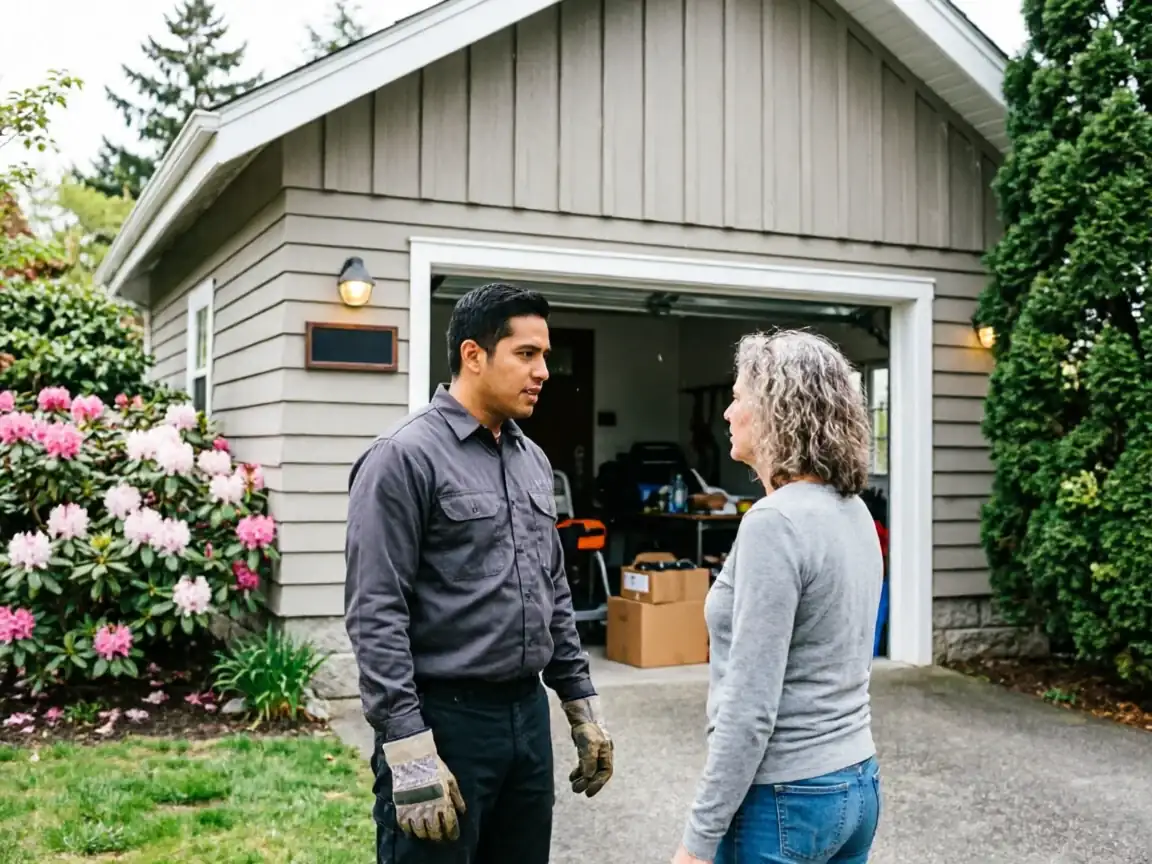
What you pay depends on what's actually broken. A single frayed cable on one side is a different job than two cables plus a bent track from the door dropping unevenly, and if the drum the cable winds onto has worn a groove, that's another part. We don't have a flat number to quote you here - nobody honest does before they see the door - but the cable itself is one of the cheaper parts on the whole unit. The labor to do it safely, with the door under spring tension, is where the job earns its price. We'll tell you the number before we touch anything, not after.
Parts We Carry
Brier's housing stock sits close to the broader 1972-2005 window for this service area
With most of it clustered mid-80s, so the cable drums, end bearing plates, and standard-lift track hardware from that era are parts we stock on the truck, not parts we order and come back for. Galvanized aircraft cable in the common gauges is routine stock too.
Where we sometimes have to order in is a door that's had one non-matching replacement part put on it somewhere along the way
A drum from a different manufacturer, a track width that doesn't match the rest of the hardware. That's not a Brier-specific problem, it just happens on older doors that have had one owner's quick fix done before ours. If that's the case, we'll say so on the spot rather than force a part that doesn't fit.
How Long You Are Without the Door
A straight cable swap on a standard torsion door - the kind of door that's typical for a house built around 1986 - is a same-visit job once we're on site with the right cable gauge and drum. The door comes back level and runs on both sides again before we leave.
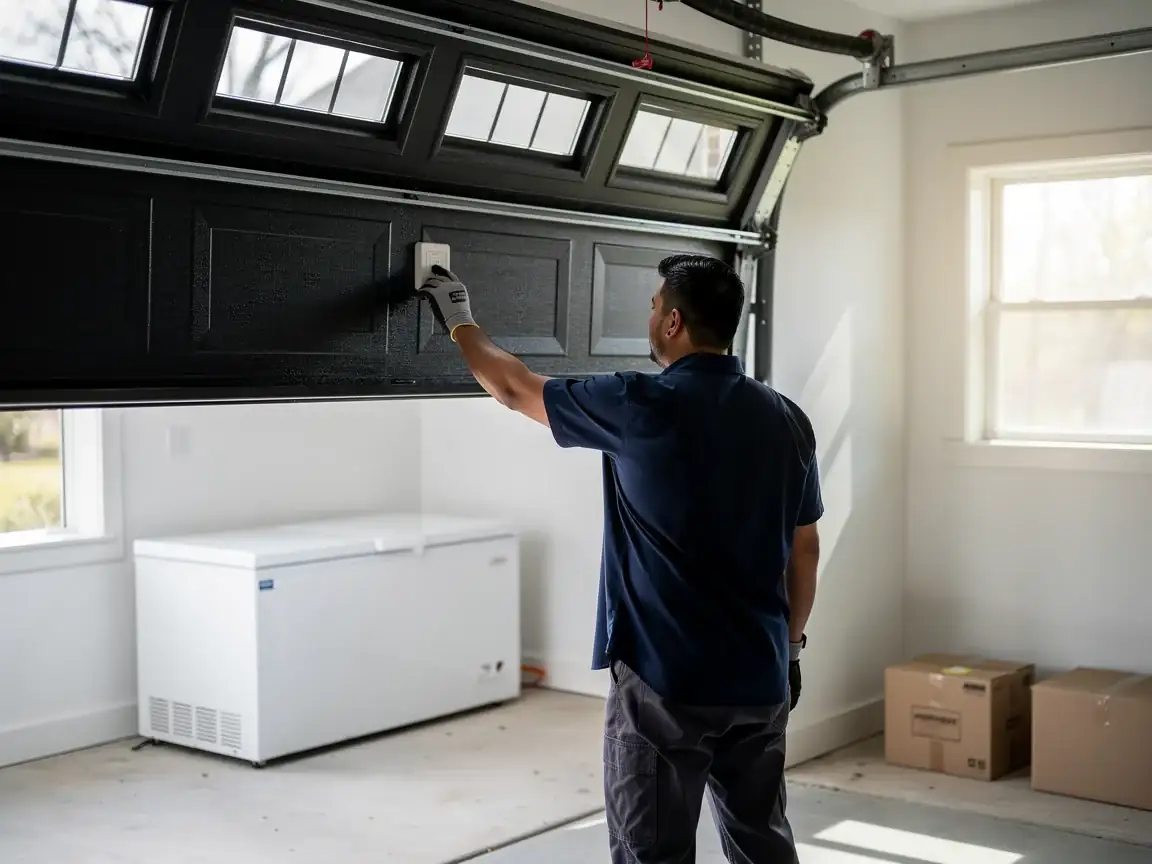
The cold moderate climate out here is worth mentioning because it's part of why cables go in the first place: freeze-thaw cycling on an outdoor-facing track head corrodes a cable strand by strand over the years, and the break usually comes without warning on a cold morning when the steel is stiffest. That's the call we get most. If the drop also bent the track or cracked a bottom panel, the visit runs longer because we're straightening or swapping hardware beyond the cable itself, but we'll know that within the first few minutes of looking at it.
How We Fix It
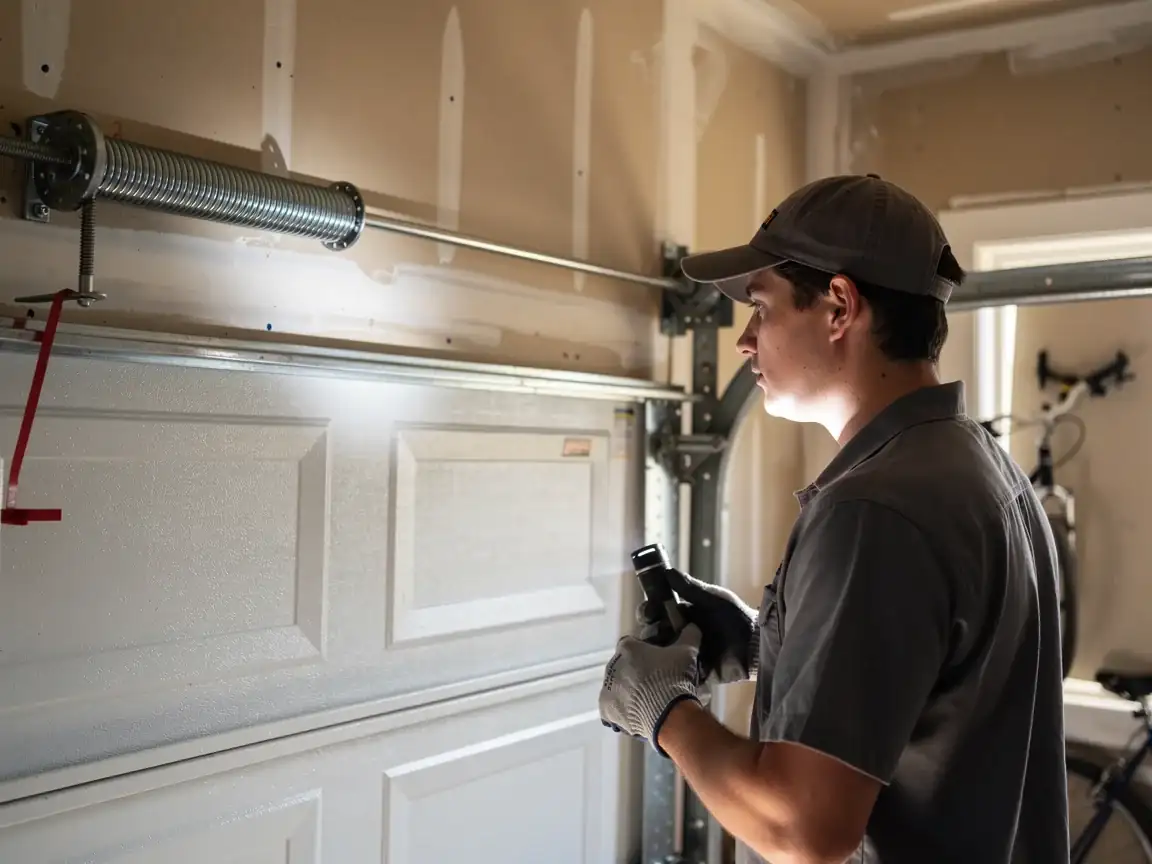
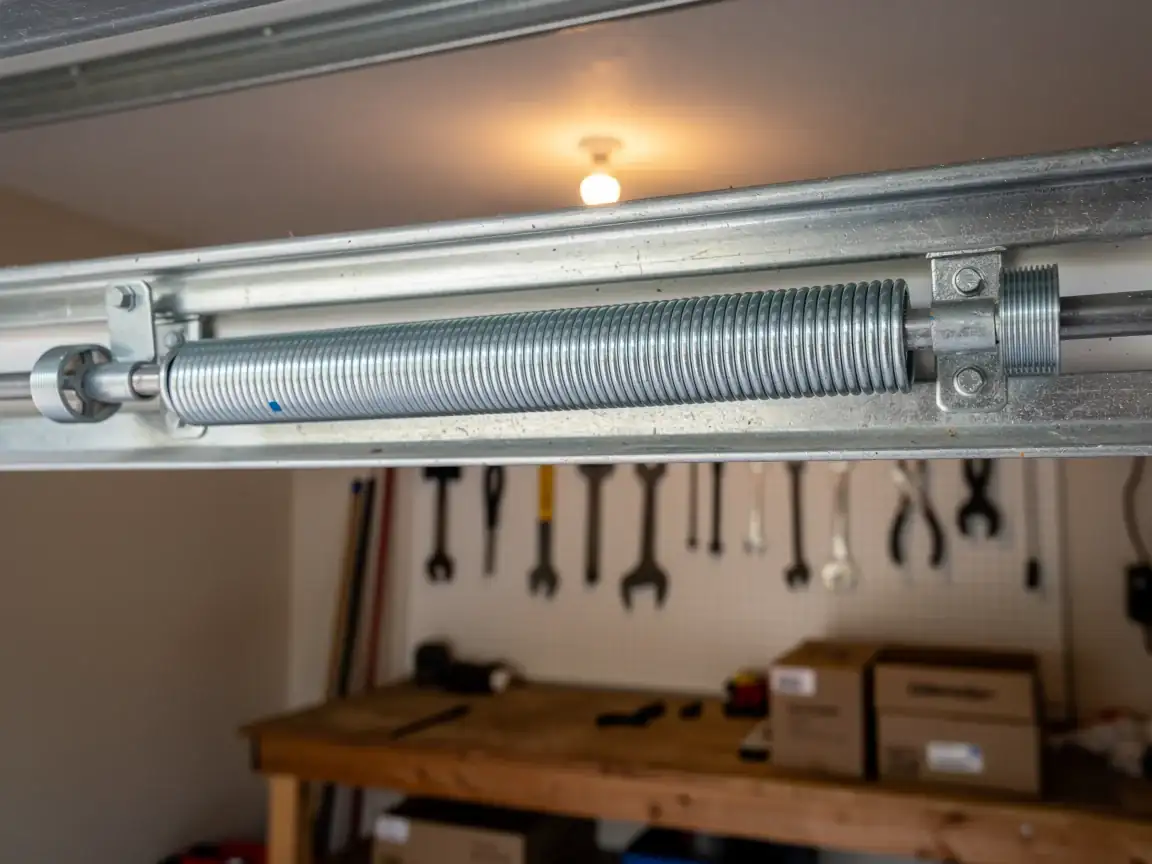
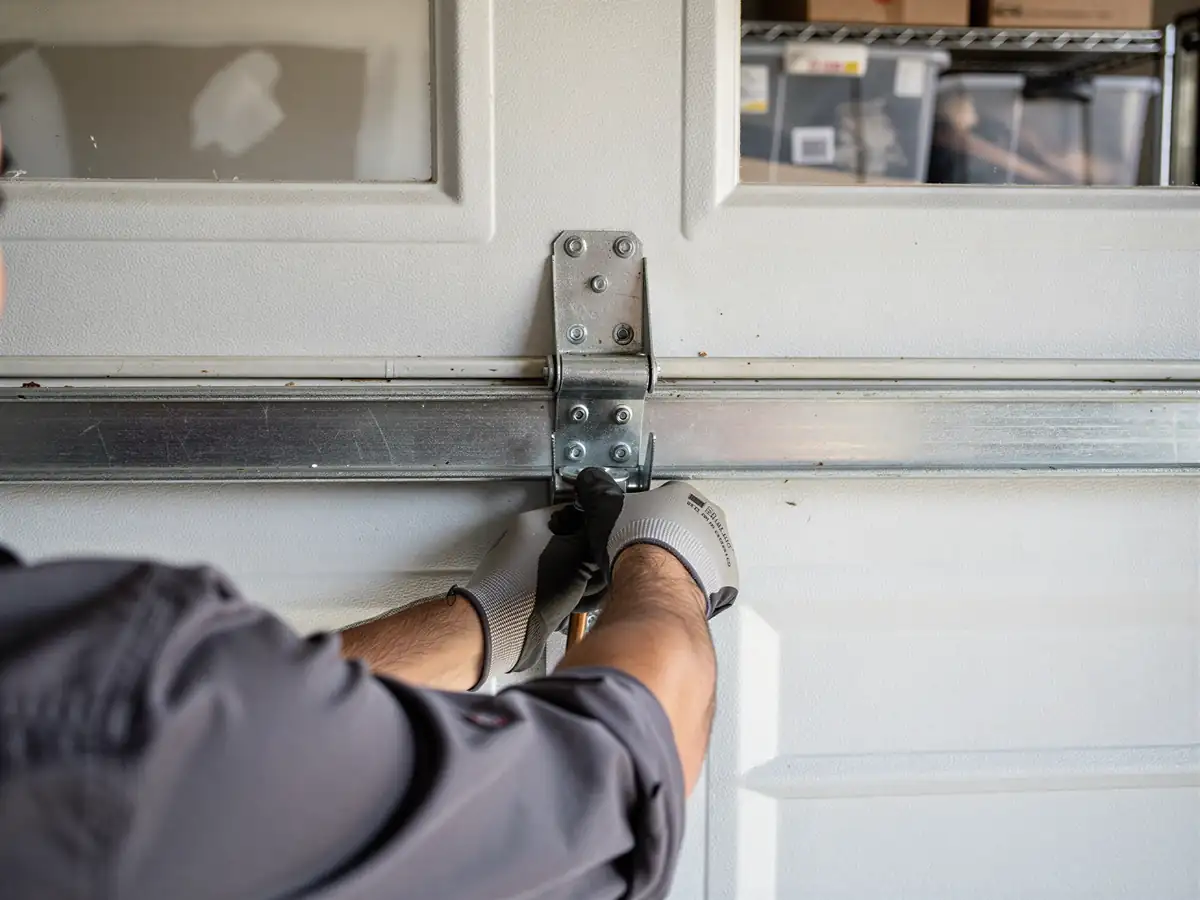
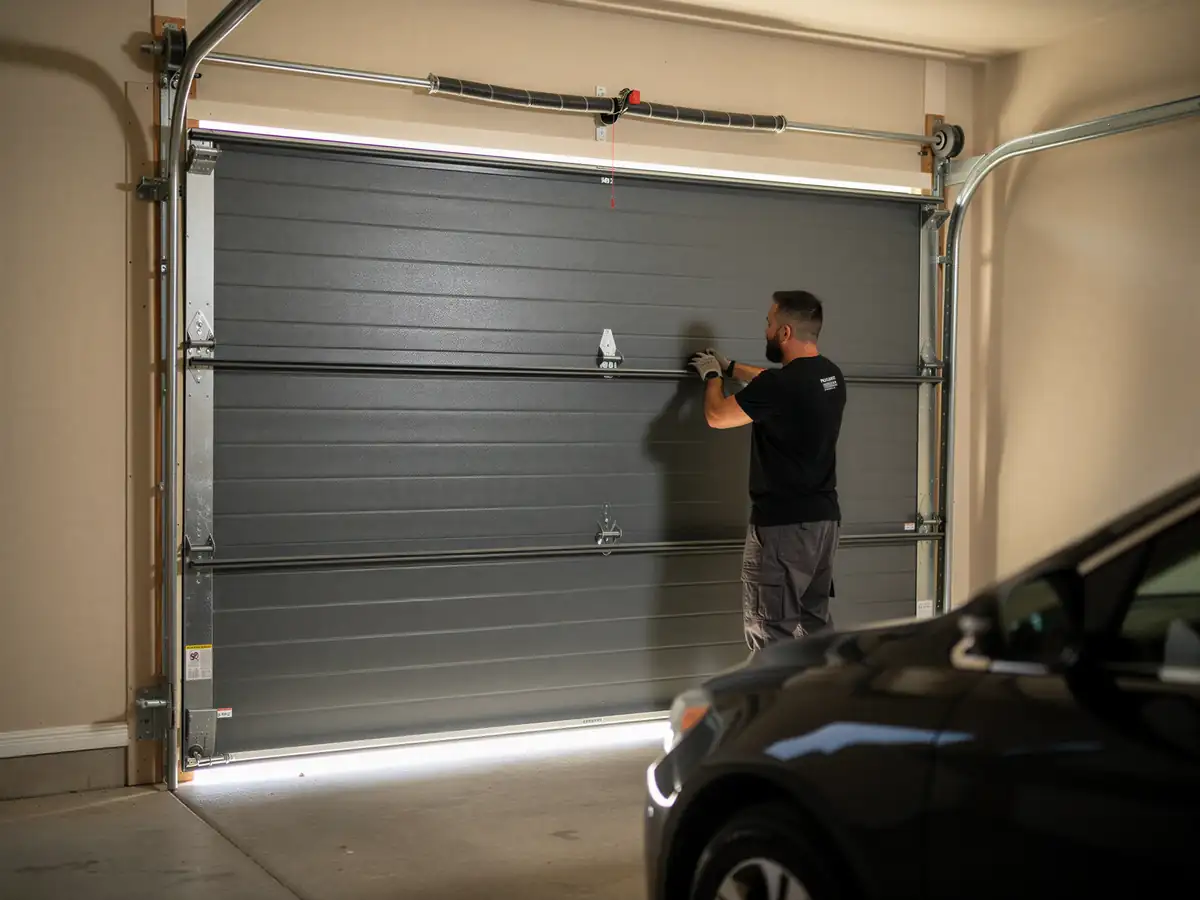
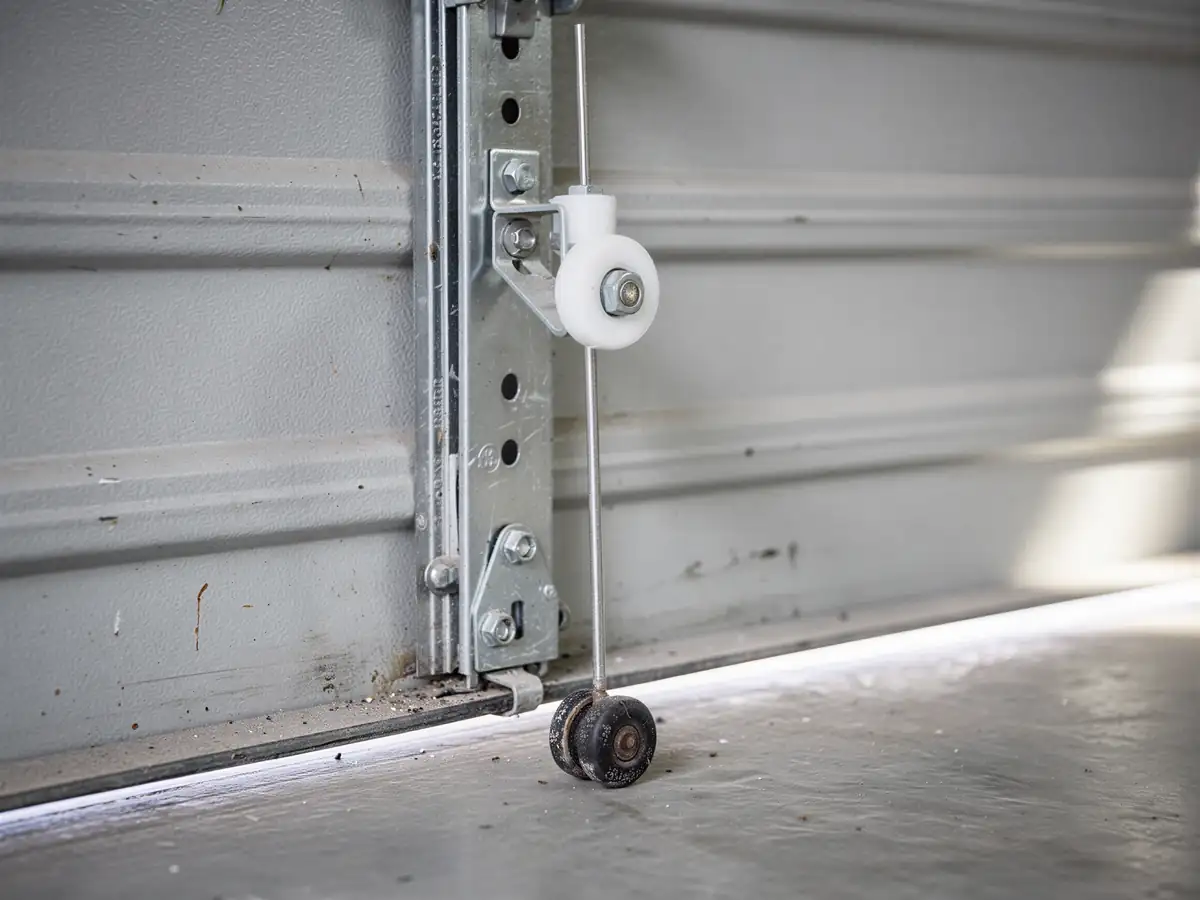
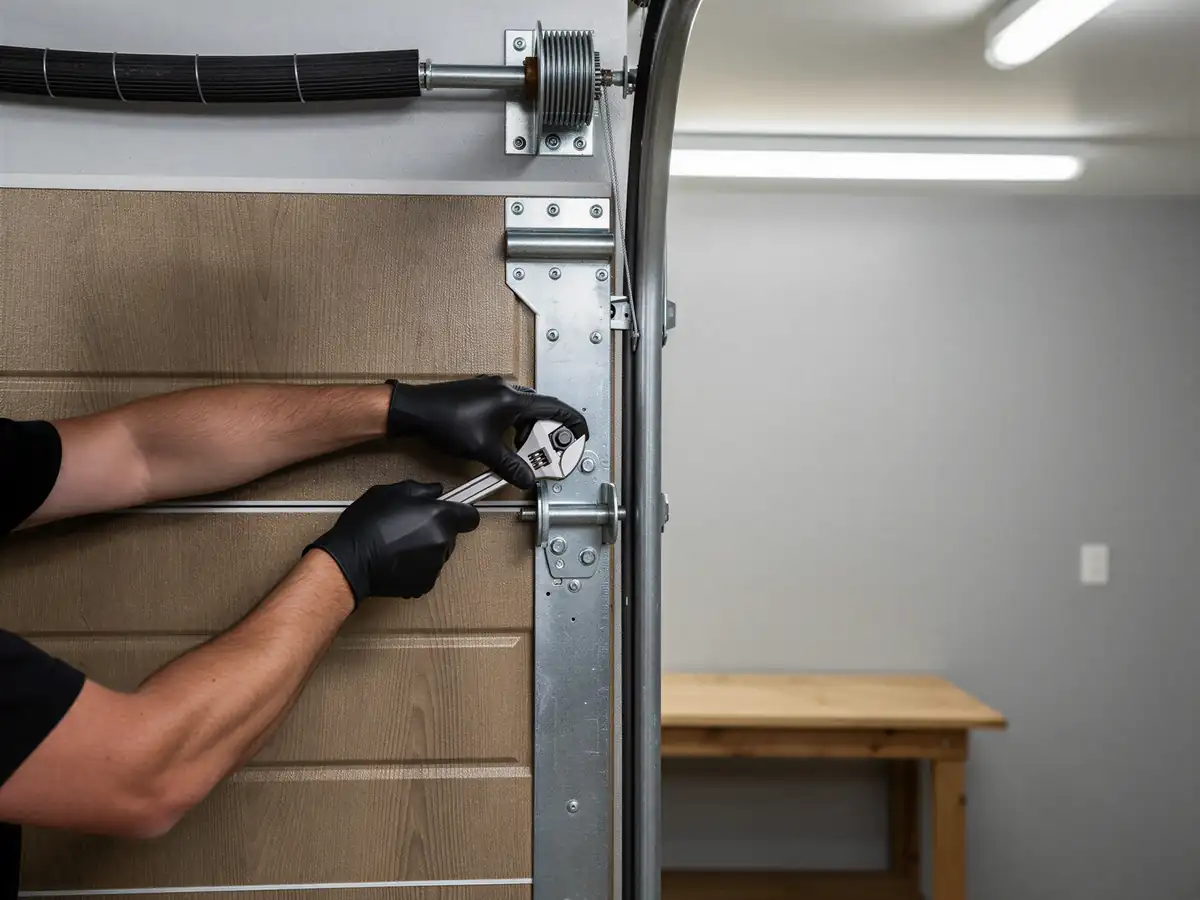
We release the spring tension first - that's the step that makes a snapped-cable call dangerous to do yourself, since a door this size on a two-car opening carries real stored force in that spring. With tension off, we pull the old cable, check the drum it rode on for grooving or wear, and check the other side's cable even if it hasn't failed yet, since on a door built around 1986 the two cables are usually close in age and condition.
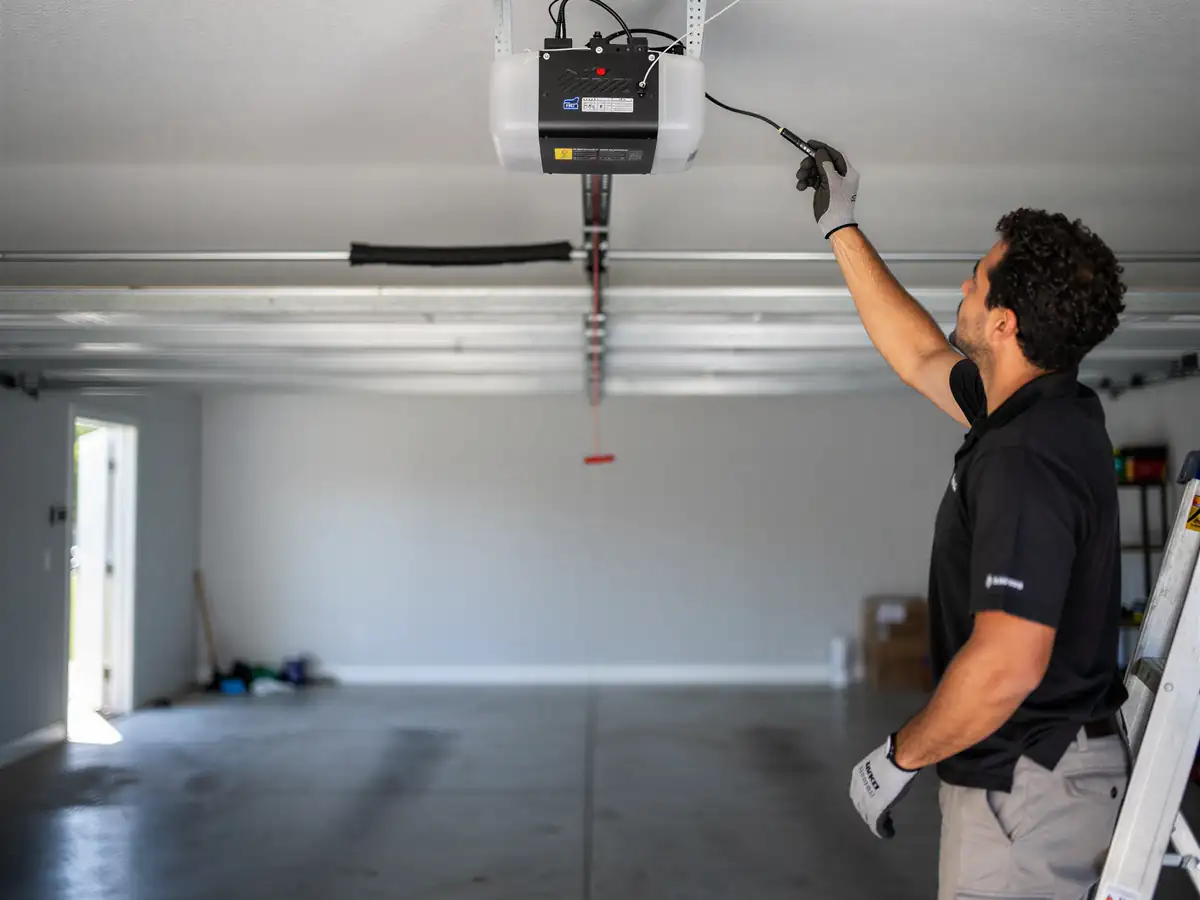
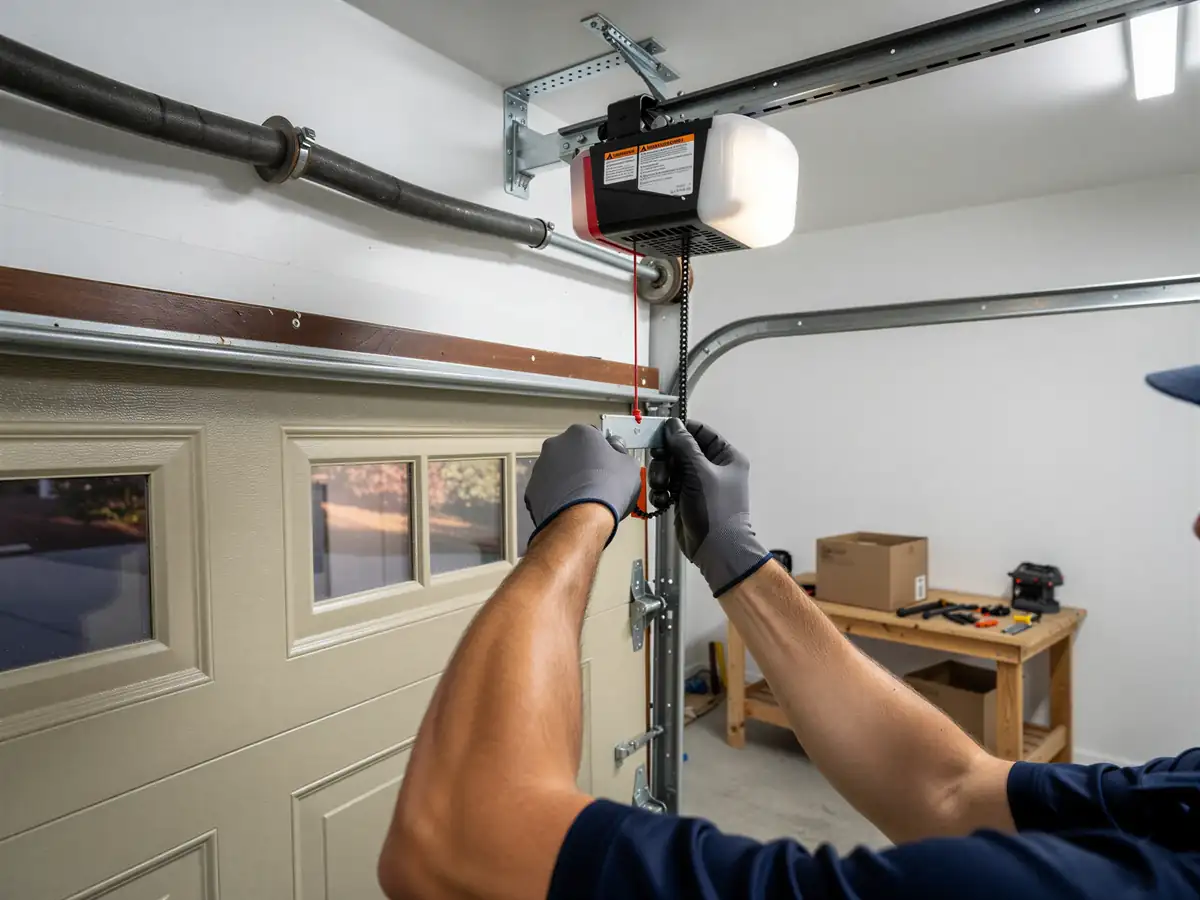
New cable goes on, we re-tension evenly on both sides, and we run the door through a full open-close cycle checking that it tracks straight and the opener isn't straining against a misaligned cable. If the opener itself is original to the house, we'll flag it, but that's a separate conversation from the cable job you called about.
Getting It Booked In
We cover Brier out of our Woodinville shop, about 6 miles up the road
And a cable repair call here is a standard dispatch, not a special trip. Tell us when you call whether the door is stuck shut, stuck open, or hanging unevenly - that changes what we bring on the truck and how we sequence the morning.
- 6 miles
One limitation worth saying plainly
If your door uses a cable gauge or drum style we don't carry as standard stock, we'll quote the repair but may need a day to get the exact part in rather than force a near-match onto a torsion system where fit actually matters. We'd rather tell you that up front than put on a part that fails again in six months.